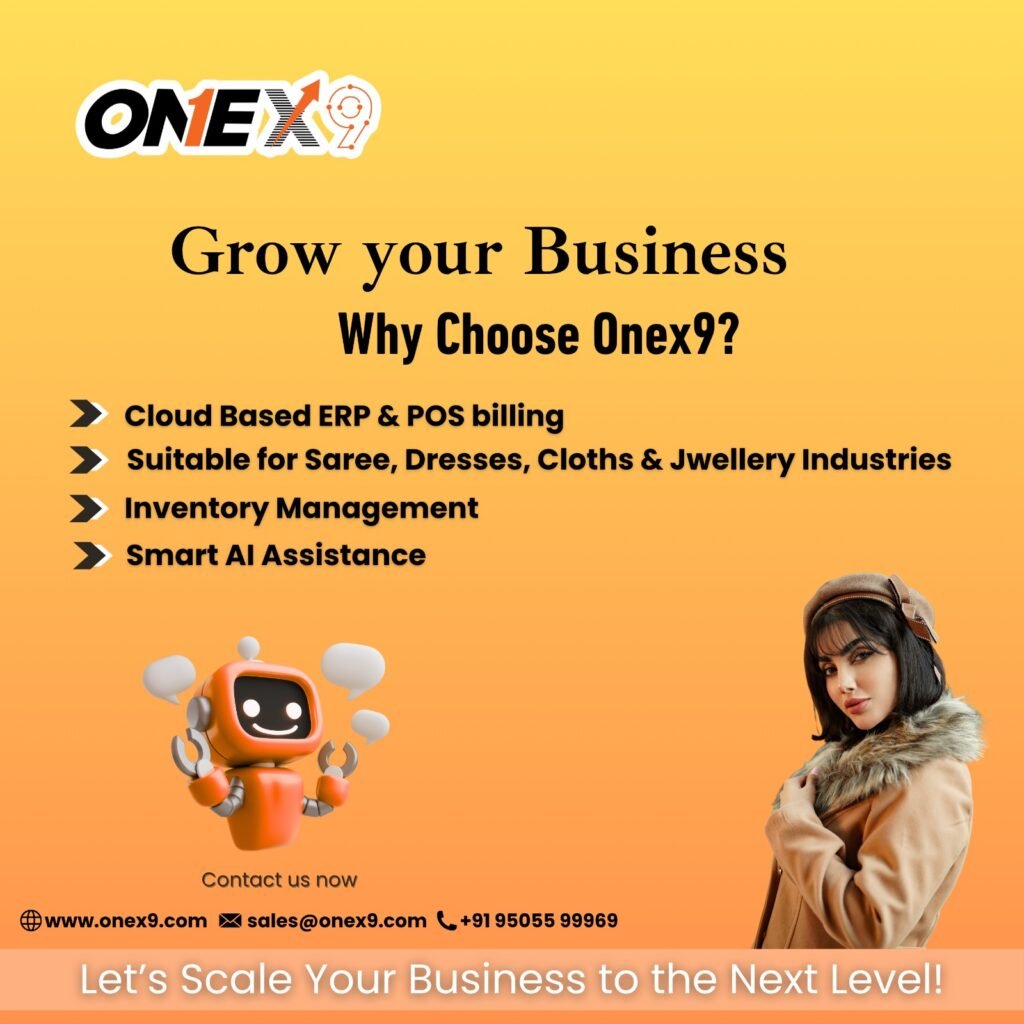
OneX9 had no social presence at all. As an ERP software company selling into a crowded B2B category — school management, retail/POS billing, healthcare ERP — the brand had zero visibility with the SMBs and institutions it was trying to reach. There was no account, no content library, no visual identity for social, and no process for turning product features into content people would actually stop and look at.
The brief was simple to state and hard to execute: build a brand presence on Instagram from a completely blank slate, and make an ERP product — inherently unglamorous, back-office software — look credible and interesting enough to drive inbound interest.
What
I Did
Starting the account from scratch, I owned the full loop — strategy, creative, and execution — with no supporting team:
Brand visual system for social: Translated OneX9's product identity (the black/red "ONEX9" wordmark) into a consistent Instagram grid — templated creative formats for feature highlights, POS/billing use-cases, and customer-facing benefit posts ("Simplify POS Billing," "Boost Sales & Customer Experience").
Content strategy: Built a recurring content mix around the product's core pillars — retail/POS billing, inventory management, CRM, and customer experience — instead of generic "software company" posts, so every piece of content mapped to something OneX9 actually sells.
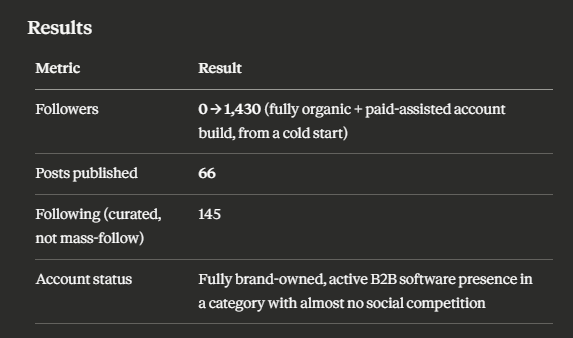
Consistent posting cadence: Grew the account to 66 published posts through a structured, ongoing content calendar rather than sporadic posting.
Paid promotion: Ran boosted posts/ads on top of organic content to accelerate reach beyond the organic follower base. (add: typical monthly ad spend, targeting approach, or boost frequency if you want this quantified)
End-to-end ownership: Every part of the funnel — ideation, design, copywriting, scheduling, and boosting — was run solo, with no designer or video editor support